Proudly American
First Impressions: Bold, Warm, and Instantly Recognizable
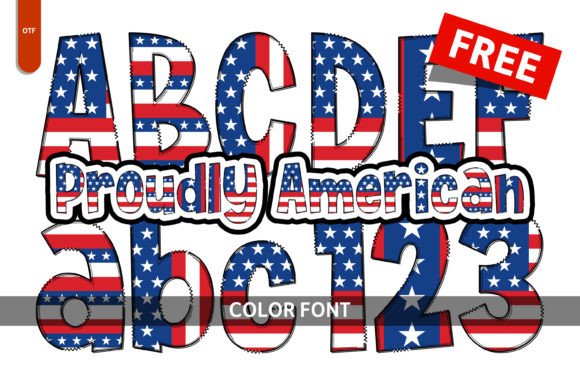
When I opened Proudly American for the first time, I didn’t see just another patriotic font—I saw a design that breathes confidence without shouting. Its letterforms carry subtle flag motifs: stars embedded in counters, stripes echoing in serifs, and a rhythm that feels grounded, not rushed. It’s not overly ornate, but it’s never plain. That balance is rare—and critical—when you’re choosing a machine embroidery design meant to hold up on real fabric, under real needles, for real customers.
A Real Project Test: Embroidering a Linen Kitchen Towel
Last week, I used Proudly American on a heavyweight linen tea towel for a small-batch boutique order. The client wanted something warm and timeless—not kitschy—for their Fourth of July holiday collection. I chose a medium hoop size (5" x 7"), medium-weight cutaway stabilizer, and cotton-wrapped polyester thread in navy and white. What stood out immediately was how well the design scaled: the letter spacing stayed legible at 3.2", and the star details remained crisp—not lost in fill stitch density or swallowed by fabric texture. Customers later told me the towel felt “handmade with intention,” not mass-produced. That’s the quiet power of Proudly American: it elevates a simple phrase into something emotionally resonant.
Where It Shines (and Where It Asks for Thought)
Proudly American works beautifully on structured, stable fabrics—think denim aprons, canvas tote bags, twill caps, and cotton sweatshirt fronts. Its confident weight and clear negative space translate cleanly in satin stitch and balanced fill stitch. I’ve used it successfully on baby onesies (with lightweight tear-away stabilizer) and embroidered patches bound for outdoor festivals—no fraying, no distortion.
But it’s not universally forgiving. On thin or stretchy knits—like lightweight t-shirts or jersey baby blankets—I recommend testing first. The design’s moderate detail level means tight curves and inner corners (especially around the “A” and “R”) can feather or blur if tension or stabilizer isn’t dialed in. On dark fabric, avoid light thread unless you’re adding a white underlay—it’s not a high-contrast design by default. And on curved surfaces like baseball caps, keep the width under 2.5" to prevent distortion at the crown seam.
More Than Just Letters: How It Shapes Your Product’s Voice
This isn’t just about legibility—it’s about perception. When a customer sees Proudly American stitched on a handmade pillow cover or an Etsy-listed sweatshirt, they register sincerity before they read the words. It reads as intentional, respectful, and craft-forward—not generic or clip-art-ish. That builds trust, especially for small shop owners and Etsy sellers who rely on authenticity over volume.
I’ve noticed repeat buyers respond more strongly to items using Proudly American when paired with neutral backgrounds and natural fibers. It lends professionalism without coldness, patriotism without loudness. For wedding or anniversary gifts (“Proudly American Since 1987”), it adds quiet dignity. For holiday embroidery or nursery decor, it grounds whimsy with warmth.
Design Assets & Commercial Use: What You Should Check First
As a Color Fonts release, Proudly American likely includes layered color guidance—but remember: embroidery machines don’t read color layers the way design software does. You’ll need to separate thread colors manually or confirm whether the embroidery file already maps red/white/blue zones to distinct stitch sequences. Before listing a finished product—or selling the digital embroidery file itself—verify licensing terms. Some fonts allow personal use only; others permit commercial embroidery but restrict resale of the vector source. When in doubt, assume you must test, adapt, and attribute appropriately.
Practical Designer Notes You’ll Actually Use
- Always test on scrap fabric—especially if stitching on textured weaves or blends. Linen, duck cloth, and midweight cotton behave very differently than poly-cotton blends.
- Review stitch density before hooping. Dense fills look rich on towels but can stiffen baby clothes. Adjust underlay or reduce density if needed.
- Confirm hoop size compatibility. If your smallest hoop is 4" x 4", avoid scaling Proudly American below 2.7"—the stars and stripe accents lose definition.
- Inspect small details in your embroidery software: check stitch direction on curves, verify jump stitches are minimized, and ensure no tiny elements are set to running stitch alone.
- Test black-and-white mockups before finalizing. Does it still read clearly without color cues? That’s your clue to how it will land on dark fabric or in low-light settings.
- Use proper stabilizer—cutaway for knits, tear-away for wovens, and fusible + tear-away for lightweight linens. Skipping this step risks puckering that flattens the design’s personality.
- Compare light vs. dark backgrounds in your digital preview. Not all thread colors pop equally—navy on black may disappear; white on ivory may lack contrast.
Fitting Into Your Creative Workflow
Whether you’re designing a custom embroidered patch for a veterans’ group, prepping printable mockups for your Etsy listings, or building a cohesive brand kit for your craft business, Proudly American slots in with purpose. It’s versatile enough for seasonal collections and timeless enough for year-round merchandise. As a Fonts asset, it pairs well with clean sans-serifs for secondary text—never competing, always complementing.
For digital product sellers: consider bundling Proudly American with complementary anchor designs—a simple eagle motif, a minimalist star cluster, or a coordinating border. That turns one font into a full embroidery project toolkit.
Final Thought: It’s Not Just Patriotic—It’s Thoughtful
What makes Proudly American stand out isn’t just its theme—it’s how thoughtfully it’s constructed for real-world making. It respects the craft, the fabric, and the person wearing or gifting the finished product. In a sea of loud, fast, disposable designs, this one asks you to slow down, choose well, and stitch with meaning. That’s why it’s earned a permanent spot in my go-to embroidery project folder—and why it might just earn a place in yours.