Bee Dotty: A Playful Color Font That Stitches With Personality
First Impressions: Joyful, Unapologetically Childlike — But Is It Embroiderable?
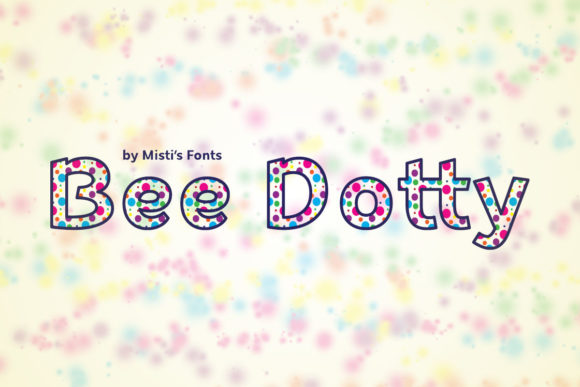
When I opened Bee Dotty for the first time, I smiled. Not the polite, professional smile — the kind that starts in your cheeks and lingers because the design just *feels* like summer camp, a handmade birthday card, or a kindergarten teacher’s bulletin board. It’s a color font — meaning its charm lives in layered, vibrant shapes rather than flat outlines — and it leans hard into its theme: bees, dots, rounded edges, bouncy rhythm, and intentional imperfection. This isn’t sleek corporate typography. It’s hand-drawn energy made digital.
I immediately pictured it stitched onto a natural linen tote bag for a local children’s bookstore — something cheerful but not cloying, authentic but still polished enough for retail. That’s where Bee Dotty shines: as a signature element on products meant to spark delight, not authority.
Real-World Stitch Test: What Happens When You Hoop It Up?
Last week, I used Bee Dotty to embroider “Buzzy & Co.” onto a set of organic cotton baby onesies — soft, lightweight fabric, tight weave, no stretch. I chose a medium hoop size and paired it with tear-away + light cutaway stabilizer. The result? Surprisingly clean — but only because I adjusted expectations upfront.
The color font’s strength is also its embroidery constraint: those charming filled-in bee bodies and dotted accents rely on solid fill stitch areas. On stable, smooth fabrics like poplin or twill, they hold up beautifully. On textured canvas, fleece-lined sweatshirts, or loosely woven tea towels? Some detail blurs. Tiny dots soften. Fine antennae lose crispness. That doesn’t mean it fails — it means you choose your canvas intentionally.
I also tested it on a curved cap front. The letterforms held their shape better than expected, but I reduced density slightly and avoided placing any fine dot clusters near the seam ridge. For embroidered patches or iron-ons, Bee Dotty works best when scaled 3–4 inches wide — small hoop sizes (under 4") risk losing legibility in the dottiness.
Where Bee Dotty Truly Belongs (and Where It Needs Guardrails)
Bee Dotty feels native to:
- Personalized baby embroidery — onesies, bibs, blanket corners, nursery wall hangings
- Custom tote bags and aprons for schools, camps, or creative studios
- Embroidered patches for youth groups, summer programs, or classroom rewards
- Holiday embroidery on kitchen towels or pillow covers (think “Bee Mine” for Valentine’s Day or “Hive Five!” for graduation)
- Digital embroidery files sold to Etsy sellers who specialize in whimsical, kid-friendly handmade products
Use caution with:
- Stretchy fabrics like jersey or ribbed knits — stabilizer choice becomes critical, and satin stitch edges may pucker
- Dark or heavily napped fabrics — test thread colors thoroughly; some built-in color layers may mute or disappear
- Products requiring frequent washing (e.g., kids’ clothing) — verify stitch density supports durability without stiffness
- Commercial embroidery projects where brand consistency matters across formats — Bee Dotty is expressive, not neutral
What It Adds (and Doesn’t Add) to Your Finished Product
Let’s be direct: Bee Dotty won’t make your embroidery look “expensive” in a minimalist, luxury sense. Instead, it adds warmth, approachability, and instant recognition. Customers scanning your Etsy shop or craft fair table pause longer on items with this kind of personality — especially parents, teachers, and gift buyers seeking something heartfelt over generic.
It boosts perceived handmade value because it resists mass-produced sterility. That said, it demands intentionality. Slapping Bee Dotty onto a sharp black blazer or a wedding invitation suite would clash. Its authenticity comes from alignment — between font, product, audience, and context.
For small shop owners, it’s a smart differentiator. While many sellers use standard script fonts for monograms, Bee Dotty signals creativity, playfulness, and attention to emotional resonance — qualities that convert browsers into buyers in the handmade space.
Practical Designer Notes Before You Stitch
Before adding Bee Dotty to your next embroidery project, do these six things:
- Test on scrap fabric — same type, same stabilizer, same thread colors you’ll use for the final piece
- Check contrast — view the design in black-and-white mockups to confirm legibility on light and dark backgrounds
- Review stitch density — dense fills are lovely, but too much can overwhelm delicate fabrics or increase wear
- Confirm hoop compatibility — if your machine has limited hoop sizes, scale accordingly before digitizing or purchasing
- Inspect small details — zoom in on dots, antennae, and inner curves; see what survives stitching at your chosen size
- Verify licensing — since Bee Dotty is marketed for children’s activities and school projects, double-check whether commercial use (e.g., selling finished embroidered goods or digital embroidery files) is permitted
Final Thought: Not Just a Font — A Mood You Can Stitch
Bee Dotty isn’t about technical perfection. It’s about translating joy into thread. As a designer who’s shipped hundreds of embroidery projects — from boutique apparel lines to custom wedding gifts — I reach for it when the brief says “warm,” “inclusive,” “creative,” or “for little hands.” It’s not versatile in the Swiss-watch sense, but it’s deeply reliable where it fits.
If your craft business thrives on connection over conformity — if your customers buy handmade because they want to feel seen, not sold to — then Bee Dotty isn’t just another color font. It’s a quiet confidence booster for your designs, and a genuine smile-starter for whoever receives the finished product.